
MGS 2026 Recap: Faster Marketing Decisions with MCP and Data
Do you start every morning waiting two hours for yesterday's ad results to land in your inbox? When data arrives late, problems get spotted late, and any hypothesis that takes half a day to check usually never gets checked at all.
MCP (Model Context Protocol) is a standard way for an AI to connect directly to outside tools, such as ad attribution or CRM platforms, and query their data. This post recaps "Speed Is Strategy: Faster Marketing Decisions with AI-Connected Data," a session by Jieun Lee and Hyuni Lim of W Concept, a Korean fashion e-commerce platform. The daglo marketing team attended it at Modern Growth Stack (MGS) Week 2026, held July 21 to 24, 2026 at the Westin Seoul Parnas.
W Concept connected Claude Code to the Airbridge and Braze MCP servers and removed the wait for data. We transcribed the session with daglo on site, then reread it afterward to pull out the cases and numbers.
Fast teams differ in how they access data, not in skill
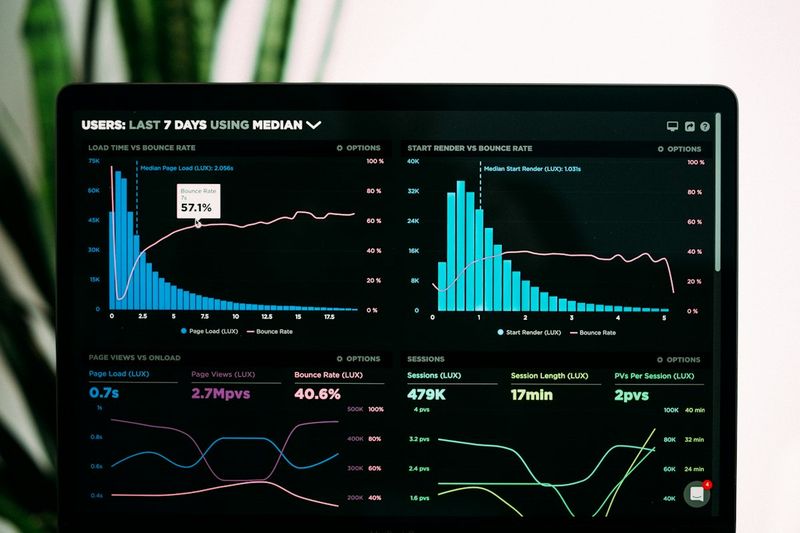
With marketing data connected through MCP, the gap between a question and an answer shrinks to minutes. W Concept argued that fast and slow teams differ not in ability but in whether data has to pass through human hands first.
The team manages ad budgets in the billions of won each month, yet it used to wait two hours every morning for data from media platforms, agencies, and internal systems. Mondays were worse, with three days of weekend data arriving at once. Now an AI teammate the team calls "Jiwon" has yesterday's results ready by 8 a.m.
- 8 a.m. briefing: KPIs, anomalies, and today's ad schedule, with anomalies traced to the exact funnel stage that's stuck.
- Promotion forecasts: Sales compared against the same hour yesterday, the same weekday last week, and the same promotion last year.
- Ad request summaries: Dozens of weekly ad requests from the sales team, organized so managers and neighboring teams see the same screen.
That freed up two hours a day, or 40 hours a month, for judgment calls. One speaker spent six months learning Python, but now that asking "show me yesterday's Meta results" in plain language returns an answer instantly, the speaker said it made them wonder why they had bothered.
A re-engagement campaign check: 96% weren't the target

W Concept ran a re-engagement campaign aimed at users who hadn't visited in over 180 days. When the team checked, only 4% of the users it brought back were actually lapsed. The other 96% were already active.
| Step | With SQL | With MCP |
|---|---|---|
| Work involved | Write and verify queries, run large jobs, wait | Ask in plain language |
| Time | 3 to 4 hours | 1 hour |
| Output | User matching | Matching plus an analysis of why targeting missed |
The conclusion: paid media struggles to win back lapsed users. W Concept moved that entire budget to new-user acquisition. It wasn't a campaign tweak but a change in strategy, and cheaper validation means less budget spent on wrong assumptions.
Connecting attribution and engagement reveals user quality

Airbridge knows where a user came from, and Braze knows what that user is doing. Linking the two by user ID showed whether each channel's users went on to buy, and what their lifetime value looked like.
- A hidden audience: Analyzing non-member device data that never reached the internal database showed only 30% of app installers went on to sign up.
- Quality by channel: The share of VIP users varied sharply across CRM channels (46%, 34%, and 11%), so the team decided to reallocate budget by user quality.
- A sharper target: 1.78 million lapsed users narrowed to 21,000 who came in through ads, and then to about 4,200 who signed up and lapsed in the same month.
| Channel | User mindset | Message strategy |
|---|---|---|
| Search ads | Clear intent | Show items of interest with coupons already held |
| Display ads | Deal seekers | Same-day coupons for quick conversion |
| Organic | Active browsers | Curated trending items with extra perks |
Making AI analysis trustworthy: cross-checks and human judgment
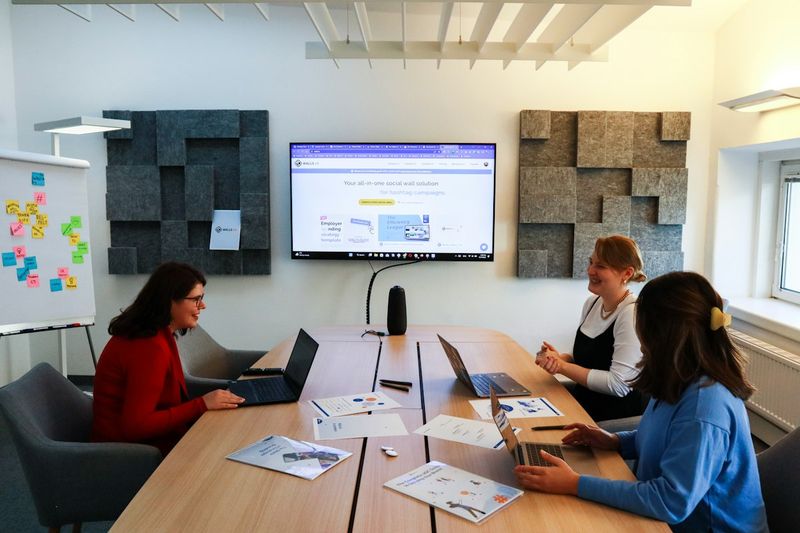
AI can deliver a confident, plausible wrong answer. W Concept's rule is to use AI for speed but leave judgment to people, so a human always checks the logic behind a result.
The team also found that a single agent tends to reinforce its own hypothesis. So it runs the same data through two agents at once, one acting as a data scientist with a quantitative lens and one as a data analyst with a strategic lens, then examines where their readings diverge. When a question like "how far should we build out the app install banner?" comes up in a meeting, the team queries the data on the spot and decides. Choices that used to take tens of minutes, or rested on gut feeling, now take a few minutes and rest on evidence.
Key takeaways for faster, data-driven marketing decisions
The core lesson is that lower validation costs raise both the depth of questions and the quality of decisions. Measuring a new tool by the number and depth of questions it enables is more telling than counting reporting hours saved.
- Do you have a list of hypotheses you shelved because they were too costly to check?
- Have you measured whether retargeting and win-back campaigns reached their real targets?
- Can you link acquisition data and CRM user attributes with a shared ID?
- Is there a step that re-checks AI analysis from a second perspective?
- Are you comparing user tiers and lifetime value across acquisition channels?
Decisions made from live data in a meeting are only useful later if the discussion is on record. daglo's Speaker ID remembers the voices of the people in your meetings and fills in their real names instead of "Speaker 1" from the next recording on, so it's easy to find who decided what and why. daglo is the first service in Korea to offer this to every user. Learn more about Speaker ID
For the other sessions we covered, see our full MGS 2026 recap.
#MGS2026 #ModernGrowthStack #MCP #MarketingData #CRM #GrowthMarketing #MarketingAnalytics #daglo
Where talk becomes work.
Get started with 1,000 credits a month — no credit card required.