
MGS 2026 Recap: Global App Business in the AI Era
You've added AI to your team's workflow, so why does the way your team works still look exactly the same? When you bolt an AI tool onto every step of an existing process, you often end up with more tools and the same results.
That question opened Modern Growth Stack (MGS) 2026, held on July 21, 2026, at The Westin Seoul Parnas. In the first session, "Global App Business in the AI Era," Sungpil Nam of AB180 gave the opening keynote, followed by a conversation with Hyukjae Choi of Spoon Labs about going global and AI-made content.
The daglo marketing team attended MGS 2026, and this post shares what we learned. We transcribed the sessions with daglo on site, then reread the transcripts to pull out the ideas marketers and growth teams can use right away.
What changed for global app businesses in the AI era?

The session's core message: in the AI era, building a global app business means rewriting your processes from scratch, not tweaking them step by step. Going global follows the same logic. First prove that users at home will pay, then expand in stages.
Nam named AI and agents as the themes that reshaped the past year, starting from an internal lesson. When the team tried to improve a large process one step at a time, it didn't work as well as expected. When one person ran the whole job end to end with a new agent workflow, it delivered results.
AI doesn't deliver incremental improvement. It delivers creative destruction. Rewriting things on a new foundation is the essence of AI.
Four shifts: roles, language, martech, and the human role

Nam summarized AI's impact as four shifts. Job boundaries and language barriers are falling, marketing tools are taking over entire workflows, and people are moving from doing the work to reviewing agent reports and making the call.
| Shift | What the session described |
|---|---|
| Job boundaries disappear | Marketers, analysts, PMs, and engineers work end to end on their own, splitting the job into stages rather than roles |
| Language barriers fall | Duolingo launched 148 courses in the past year, about the same number it previously released over roughly 12 years |
| Martech takes over the workflow | Analytics tools move into implementation, and MMPs go beyond reporting to optimize campaign setup, creative production, and budget allocation |
| The human role moves | Instead of giving agents tasks, people receive reports from many agents and decide |
An MMP (mobile measurement partner) is a tool that ties ad performance to app installs and revenue. These shifts are why this year's theme became "Stack AI, Rewrite Everything."
Spoon Labs: 100 videos a day and a one-hour optimization cycle
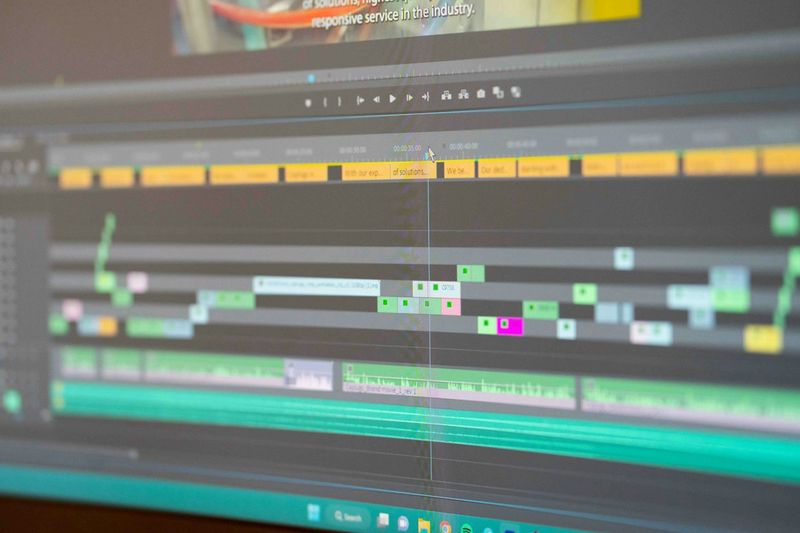
Spoon Labs earns more than 70% of its revenue outside Korea. Hyukjae Choi shared how AI changed both how much content the team produces and how quickly it makes decisions.
The company runs Spoon, an audio platform, and Vigloo, a short-form drama platform, and spends about 7 billion won a month on global marketing. When Vigloo's first year proved tough, the team visited the Chinese companies leading the market to learn from them. Choi admitted the real problem had been the belief that "we can do it better." Every practice they saw had a reason behind it.
| Metric | Before | With AI |
|---|---|---|
| Videos per editor per day | 5 to 10 | 100 |
| Marketing optimization cycle | 24 hours | 1 hour |
Today, AI agents report every hour on which campaigns to stop and where to raise budgets. On AI content, Choi said viewers care whether a story is good, not who made it, and shared titles made 100% with AI that earned back more than 10 to 20 times their production cost.
The order for going global: validate at home, then hire locals

Choi's sequence for going global is validate at home, define your global edge, and expand in stages. Budget at least four to five times your domestic cost once time and time zones are included, not two or three times.
- Validate at home: Confirm that users will actually pay before leaving your home market.
- Answer what makes you different abroad: Leading your category at home doesn't explain why you'd win globally. That needs its own answer.
- Expand step by step: Try what you haven't tried, and retry fast when it fails. Don't get carried away by small wins in revenue or traffic.
- Hire locals: Not people who speak the language well, but people from the market, as Choi explained with an example from Indonesia.
- Plan for 4 to 5x opportunity cost: If you spent 100 million won in Korea, expect around 500 million won for the same scale in the US.
Takeaways: a checklist for marketers and growth teams
The key lesson is to separate adding AI to existing work from redesigning that work from scratch. Compare these five points with where your team is today.
- Split improvement from redesign: Decide which work just needs AI added and which process should be scrapped and rebuilt, and start with the latter.
- Check your decision cycle: If campaign reviews run weekly or daily out of habit, see whether they can move faster.
- Start where output is the bottleneck: High-volume work like creative and content gains the most. Change the production system, not just the tool.
- Plan budget and people together: Build 4 to 5x opportunity cost and local hires into a global plan from day one.
For sessions with several speakers, where knowing who said what matters, daglo's Speaker ID is a useful feature: it shows each speaker's name in the transcript instead of "Speaker 1." Speaker ID remembers the voices of the people in your recordings and fills in their real names automatically from the next recording on, and daglo is the first service in Korea to offer it to every user. Learn more about Speaker ID
Catch up on the other sessions in our full MGS 2026 recap.
#MGS2026 #ModernGrowthStack #GlobalApps #GoGlobal #AIMarketing #AIAgents #GrowthMarketing #daglo
Where talk becomes work.
Get started with 1,000 credits a month — no credit card required.