
Mistplay at MGS 2026: LTV-Driven UA Beyond the ROAS Wall
Have you run a single campaign this year with a lower CPI than last year? That's how this session opened, and nobody raised a hand. If your budget still revolves around cost per install, it's only getting harder to make the math work.
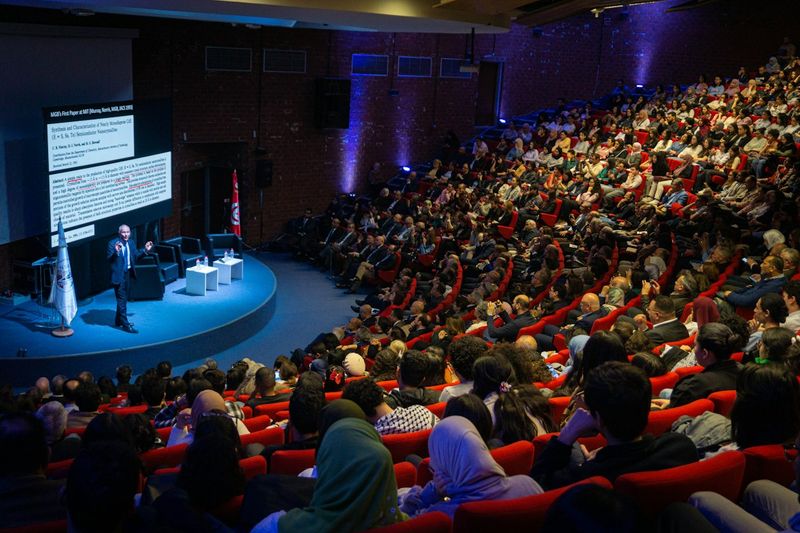
On day one of MGS 2026 (Modern Growth Stack Week 2026), Sunwoo Kim of Mistplay spoke in the PLAY HALL on "Beyond the ROAS Wall: LTV-Driven UA Strategy." His thesis: put rewards after gameplay instead of after the install, and rewarded user acquisition (UA) stops being the opposite of performance marketing. It becomes its most precise lever.
The daglo marketing team attended MGS 2026, transcribed the sessions with daglo, and went back through the transcripts to write these recaps.
The UA market: costs are up, growth comes from engagement
The case for LTV-driven UA starts with the numbers. Android CPI rose 48% and iOS CPI 3.5x, while in-app purchase revenue grew only 4%, sessions 12%, and playtime 8% over the same period.
Acquiring new players got dramatically more expensive, yet market growth is coming from existing players playing longer and more often. The center of gravity has shifted from installs to engagement. 82% of marketers who have run rewarded UA say it beat their other channels. Rewarded UA didn't suddenly get better, the speaker argued. What the market values changed.
He also argued we've been drawing the funnel wrong. We treated the install as the finish line, but for players it's the starting point. The real contest happens in the first session, where players meet the core fun; at milestones, where they settle in; and in the LTV stage of ongoing play and spending. Yet most UA budgets still pay only for that first step.
Playtime events: rewarding gameplay, not installs

Playtime events tie rewards to time played and in-game goals rather than to the install. Changing that order alone changes why players stick around.
- Time axis: reward players at checkpoints as playtime accumulates, so they know what's coming and when.
- Depth axis: reward meaningful goals like finishing the tutorial, hitting level 10, making a first purchase, or joining a guild.
Because milestones sit deep inside the game, players pass through the core fun on their way to the reward. In the speaker's words, a reward shouldn't be glue that holds players in place but a bridge that carries them to the fun. After that, the game itself has to keep them.
| Classic rewarded UA | Playtime events | |
|---|---|---|
| Sequence | Install → reward → churn | Install → playtime → milestone → reward → re-engage |
| Player motivation | Goal reached once the reward lands | Discovers the core fun while chasing rewards |
| The question | Should we do rewarded UA? | What should we reward? |
Early campaigns lifted average playtime per game by 30% and ROAS by 20%. What matters is the order: playtime rose first and ROAS followed. ROAS is the goal; playtime is the leading indicator. The belief that rewarded users are low quality, he said, came from rewarding installs, not from rewards themselves.
Getting quality and scale at the same time

Big networks offer scale but uneven quality, while high-quality channels dry up fast. The speaker called building the intersection of quality and scale the core UA design challenge for 2026.
His answer: take a proven reward model to more touchpoints. People who collect points in finance apps or cashback in shopping apps already have a proven habit of acting for rewards. Mistplay Audience Network connects app categories to reach more than 40 million monthly active users worldwide. The practical key is running one campaign across the network so that reach grows without adding operational complexity.
One Chinese developer entering Korea's MMORPG market hit 2.5x its D3 ROAS target with 40% D1 retention, about 16% higher than an average CPE channel. Social features like tournaments and buddy quests drove long-term retention.
Motivation differs by country and genre, and so should evaluation

Players in the US and UK juggle several games at once, while players in Korea and Japan go deep on a few. Copying one campaign structure across markets doesn't work.
In Western markets, simply joining a player's rotation has value, and the hook is short-cycle freshness: new content and rotating events. In Korea and Japan you're competing to be someone's main game, so the hook is assets that grow with time invested, like a character, a ranking, or a guild. Same budget, he said, but in East Asia you invest in reasons players can't leave.
| Genre | Paying users | Time to first purchase | Pattern |
|---|---|---|---|
| Puzzle | 7.4% | 1.6 days | Fast, strong conversion; aggressive ROAS targets work |
| RPG | 1% | 1.7 days | Balanced monetization; long-term LTV design is key |
| Strategy | 4.3% | 2.2 days | Slowest to pay but top session counts |
Because genres monetize at different speeds, judging a strategy game campaign at D7 by puzzle standards will kill good campaigns. Set the evaluation window by genre first.
Takeaway: a four-point checklist for LTV-driven UA
The speaker called "rewarded UA vs. performance UA" the wrong frame. Rewards aren't the opposite of performance; they're a tool for producing it, or as he put it, Reward FOR Performance. His checklist:
- Replace CPI in your dashboard's first column with playtime and LTV behavior metrics. Change what you watch, and you change what you optimize.
- Have the UA team design the path from install to core fun. It's no longer just a product or design job.
- Adapt campaign structure to each market and genre. Don't copy and paste.
- Scale proven models by widening touchpoints. Quality and scale aren't a trade-off.
Even outside gaming, it's worth checking whether your incentives land where real value is created. For recordings where who said what really matters, like sessions with several speakers or long Q&A, Speaker ID comes in handy. It remembers voices and fills in real names instead of "Speaker 1" from the next recording on, and daglo is the first service in Korea to offer it to every user. Learn more about Speaker ID
For the rest of the sessions we attended, see our full MGS 2026 recap. Event details are on the official MGS 2026 site.
Where talk becomes work.
Get started with 1,000 credits a month — no credit card required.