
MGS 2026 Recap: Amplitude's Self-Learning Growth Engine
Your team ships features and campaigns faster than ever with AI, but can you say what you've actually learned about your users? When building speeds up and learning doesn't, you work hard and still have little evidence for your next decision.
The second main-hall session at Modern Growth Stack (MGS) 2026 on July 21, 2026, "The Self-Learning Growth Engine," took on exactly this problem. Matt Bennett of Amplitude APJ and Donghoon Choi of Amplitude Korea presented back to back.
The daglo marketing team attended MGS 2026, and this post shares what we learned. We transcribed the session with daglo and reread it to pull out what growth teams can apply right away.
What is a self-learning growth engine?
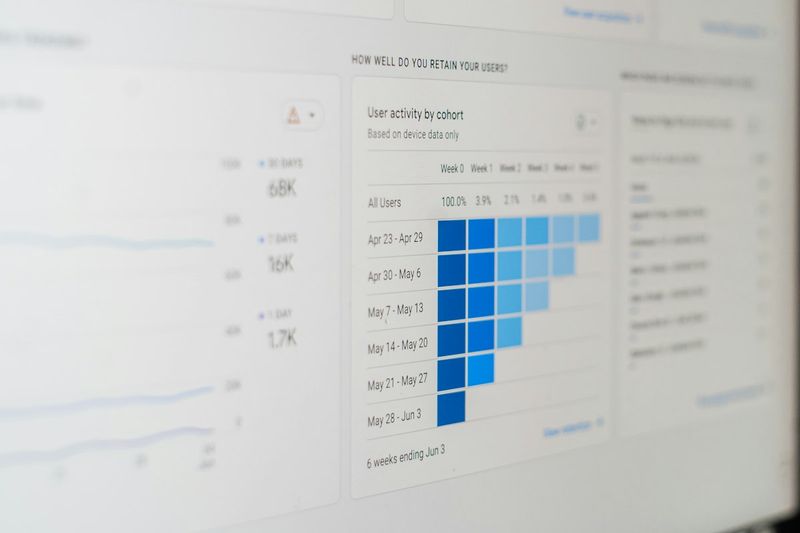
A self-learning growth engine is a system that stacks trusted data, evidence-based testing, and autonomous execution so a company keeps learning from its users. The session started from one diagnosis: execution has sped up, but understanding hasn't kept pace.
Bennett argued that our ability to see what we shipped and what happened next has fallen behind, and he named two bottlenecks:
- Trust: Endless attribution debates, dashboards nobody believes, and different numbers on every team keep people from acting with confidence. Mistaking correlation for causation is common.
- Speed: An insight has to reach the right person or agent at the moment they can act on it.
Three layers: one source of truth, proof, and autonomy
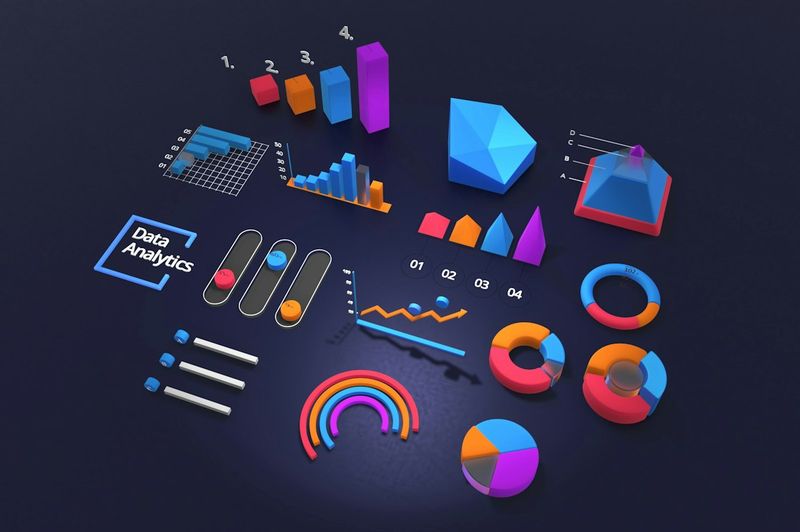
The engine has three layers. A shared data foundation comes first, then a proof layer that shows why a move makes sense, and only then autonomy, where people or agents decide on their own.
| Layer | Meaning | What it takes |
|---|---|---|
| System of Intelligence | A single source of truth | Capture every signal with a clean event taxonomy so the whole company sees the same data |
| Proof | Evidence and testing | When AI recommends an action, check why and on what evidence. Turn every release into a learning process |
| Autonomy | Independent execution | With the first two in place, people or agents can make decisions on their own |
Two examples stood out. Wanted Lab built self-serve data access across teams, improved its landing page by 150%, and recovered 7,000 monthly applications that had been slipping through its workflow. Notion built experimentation into everyday work, grew from single-digit experiments to 300 per quarter, and lifted activation by 10 to 15%.
Learn and act at a speed others can't copy. It's learning speed, not execution speed, that compounds.
The tilted learning loop and a new kind of craftsmanship
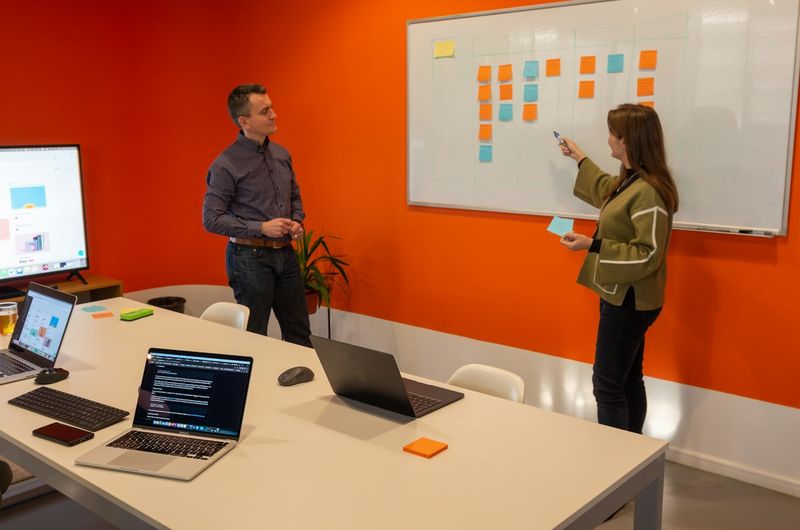
Donghoon Choi argued that most companies' learning loops are tilted. Building moves at lightning speed while learning crawls like a turtle, so teams work hard and come away having learned nothing.
Mass production two centuries ago brought abundance and a flood of copies. The companies that survived weren't the ones that made more. They were the ones that understood their users and delivered what those users valued, the ones that kept their craftsmanship. AI is repeating that story, and its side effect is AI slop: pages generated in seconds and auto-generated reports that nobody reads.
Making things easier to build is not the same as making more good things.
That's why Choi urged teams not to measure their AI transformation only by usage rates, token costs, or automation counts. The real questions are whether the user experience got better and whether users come back more often.
The learning loop in three steps: analyze, validate, roll out gradually
The new craftsmanship is a learning loop of analysis, validation, and gradual rollout. Repeating it tells you what to build next and which promotions and campaigns to run.
- Analyze: Pair traditional analytics with the voice of the customer, including store reviews, support conversations, surveys, and social reactions. Conversations between your agents and users count too. Don't just check that the chatbot works; check whether it helps users find what they want, buy, and return.
- Validate: Start with a hypothesis. If you lower a cart coupon threshold from 30,000 to 20,000 won, decide what you expect first and compare under controlled conditions, so you can tell whether a sales change came from the coupon or something else.
- Roll out gradually: Expand promotions, features, and campaigns from 1% to 10%, 50%, and 100%, and let business teams roll back at any time if something goes wrong.
Takeaways: what can't be copied, and a checklist
Features and promotions can be copied within two hours, but the learning and validation built over the past year or two, and the speed that comes from it, can't. Since every company will soon have a similar engine, both speakers concluded that the edge is a learning culture, not a tool.
- Check whether your loop is tilted: Count how many recent releases and experiments have a written answer to "what did we learn?"
- Tie AI metrics to user metrics: See whether AI usage and time saved actually move activation and retention.
- Roll out business changes gradually: Open promotions and policy changes at 1% and make sure business teams can roll them back.
For sessions with more than one speaker, where knowing who said what matters, daglo's Speaker ID is a useful feature: it shows each speaker's name in the transcript instead of "Speaker 1." Speaker ID remembers the voices of the people in your recordings and fills in their real names automatically from the next recording on, and daglo is the first service in Korea to offer it to every user. Learn more about Speaker ID
Catch up on the other sessions in our full MGS 2026 recap.
#MGS2026 #ModernGrowthStack #Amplitude #GrowthEngine #LearningLoop #Experimentation #GrowthMarketing #daglo
Where talk becomes work.
Get started with 1,000 credits a month — no credit card required.