
AB180 at MGS 2026: How to Rewrite Your AI Marketing Workflow
Your team has adopted a stack of AI tools, so why does the way it works still look exactly the same? Swap the tools but keep the structure, and productivity only inches up.
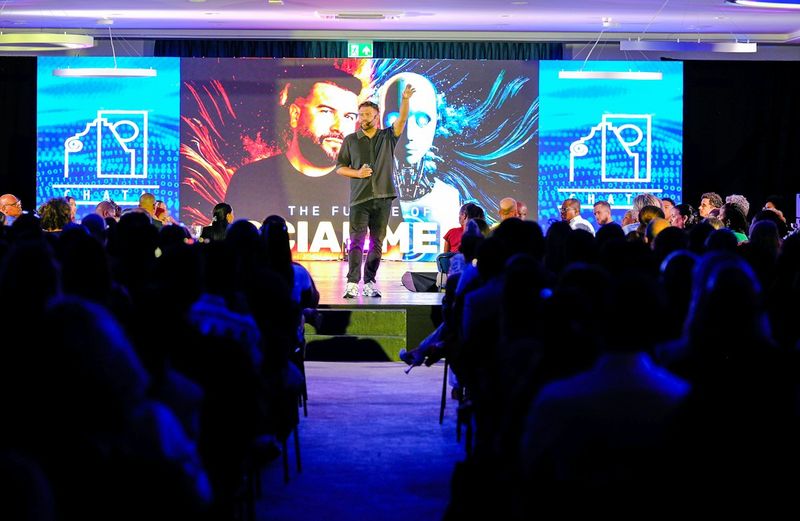
On day one of MGS 2026 (Modern Growth Stack Week 2026), Heonjae Jeong of AB180 gave a MAIN HALL talk called "Stack AI, Rewrite MMP." AB180 runs Airbridge, a mobile measurement partner (MMP) for app marketers, and hosts the event. His core argument: don't bolt AI onto existing workflows. Rebuild the foundation so AI can judge, act, and evaluate on its own using data and context.
The daglo marketing team attended MGS 2026, transcribed the sessions with daglo, and went back through the transcripts to write these recaps.
The line shaft story: swapping tools vs. rebuilding the foundation
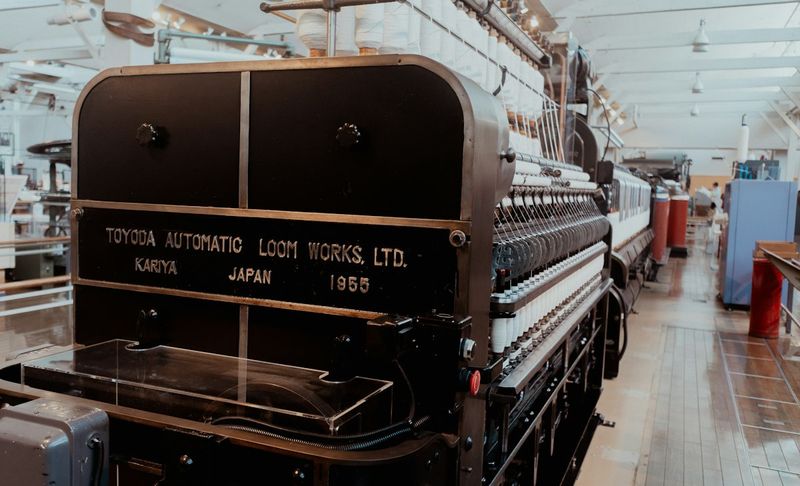
Rewriting an AI marketing workflow isn't about replacing tools. It's about redesigning the foundation the work sits on. The speaker made the case with how electricity changed factories.
In the 1880s, textile mills hung every machine off a line shaft turned by a steam engine in the ceiling. Machines had to sit near the shaft, and if one broke, everything stopped. When electricity arrived, factories first just swapped the steam engine for an electric one. Productivity rose a little, but both constraints stayed.
The real jump came when someone wired the whole floor and gave every machine its own motor. The line shaft disappeared, and so did the constraints. That shift took 30 years. Rebuilding a foundation is hard, he said, but it has to be done.
Three questions for redesigning around AI

When a new technology arrives, ask three things in order: what is its essential property, which constraint can that property remove, and what must be redesigned to make the most of it.
| Question | Electricity | AI |
|---|---|---|
| Essential property | Travels through wires and becomes power wherever it's needed | Performs a wide range of human knowledge work at low cost |
| Constraint removed | The line shaft | Dependence on people's time, skill, and throughput |
| What to redesign | Full wiring and a motor per machine | A foundation where AI judges, acts, and evaluates with data and context |
He illustrated this with a small example: writing expense notes for the company card, a 10-to-30-minute chore every two weeks. He handed it to AI with transaction history, his calendar, and the expense policy. It submits the clear-cut entries itself and asks about ambiguous ones in Slack. Mistakes get corrected and logged to improve the next call. That's a full loop of judge, act, evaluate.
The evaluation layer: metrics you can slice, and context

For AI to execute well, it first needs a definition of good execution. That takes two things: metrics broken down finely enough to evaluate, and evaluation criteria that carry your organization's context.
You can't tell which channel or creative worked unless installs are split by channel and creative. As he put it, you have to slice it to judge it. Airbridge, he noted, offers 330 metrics and 100 group-by dimensions, plus custom metrics built from the events you already collect.
He showed the effect of context by asking the same question about the same data twice:
| Without context | With organizational context | |
|---|---|---|
| Input | Campaign data only | Goal: grow customers. Priority: subscription revenue from new customers. Limits: CAC payback within 6 months, monthly budget cap |
| AI's verdict | Installs up, CPI down, so performance improved | New-customer subscription revenue is low, so it's hard to call this an improvement |
| Next step | Scale the best campaign, make more high-CTR creative | Fund only creatives and segments that meet the payback target; no budget increase |
Airbridge's AI agent, Pilot, keeps that context through a Personal Instruction field holding your goals, priorities, and constraints. An evaluation layer, in short, means sliceable metrics plus an environment where your context is always in view.
The judgment and execution layer: 10 campaign levers
At the campaign level there are five levers: create, edit, keep, pause, and resume. Creating or editing adds five more: objective and type, targeting, creative, landing experience, and budget and bidding.
- Targeting through signal engineering: ad networks make the targeting call, so the job is to design the behavioral signals you send them. Signal Hold, introduced in the talk, waits a set period after a purchase and only sends it if it isn't cancelled. One subscription app in the closed beta simply turned it on and saw subscription events rise 120% and CPI fall 20%.
- Landing experience and day-one personalization: subscription apps are largely won or lost on day one. Predicting three-day purchase probability from the first five minutes in the app was far more accurate when ad touchpoints were added to in-app events. That idea powers Entry API, which returns the onboarding flow each user is most likely to complete.
- Everything else with Airbridge GO: enter an app URL and AI helps with campaign strategy, creative, and reporting. It currently supports Google Ads, Meta, and Apple Ads.
Takeaway: find your own line shaft
He closed by saying marketing workflows need to be rewritten on a foundation where AI judges, acts, and evaluates with data and context. Here's what marketers can check right away:
- Find the line shaft in your workflow. Any step that stalls when one person is out is a candidate.
- Write down goals, priorities, and constraints. The more specific, like payback period or budget cap, the better AI's judgment gets.
- Make sure key metrics can be split by channel, creative, and segment.
- Review the events you send to ad networks. Check whether cancelled or refunded purchases are slipping through.
For recordings where who said what really matters, like sessions with several speakers or long Q&A, Speaker ID comes in handy. It remembers voices and fills in real names instead of "Speaker 1" from the next recording on, and daglo is the first service in Korea to offer it to every user. Learn more about Speaker ID
For the rest of the sessions we attended, see our full MGS 2026 recap. Event details are on the official MGS 2026 site.
Where talk becomes work.
Get started with 1,000 credits a month — no credit card required.