
On-Premise LLM vs API: Cost Comparison and When It Pays Off
Is your AI API bill growing every month, and you are wondering whether buying GPUs and running models yourself would be cheaper? Make that call without a clear rule of thumb, and you either end up with idle GPUs or keep overpaying for tokens.
An on-premise LLM is a language model you run on GPU servers your company owns, instead of calling an outside API. The daglo team recorded and summarized the talks at an AI infrastructure event (NVIDIA and Azwell AI Acceleration Day) with daglo, and combined them with official sources to answer two questions: how the cost compares with APIs, and when running your own model actually pays off.
What is an on-premise LLM?
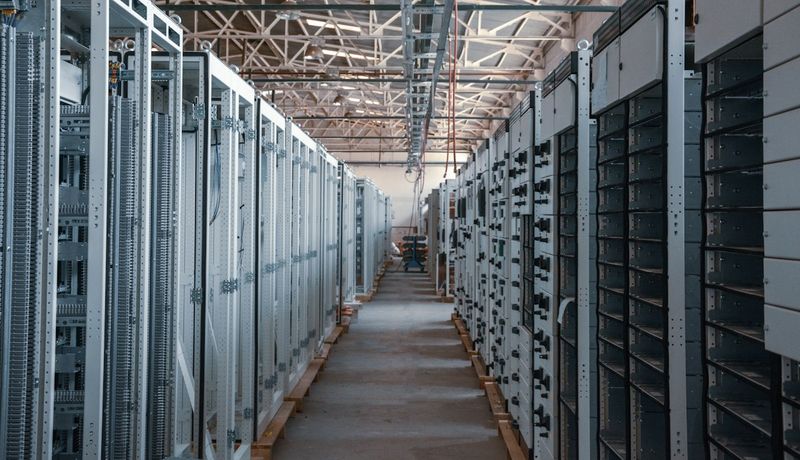
An on-premise LLM runs an open-weight model (a model whose weights are publicly released) on GPUs you own. Your data never leaves the building, and the more you use it, the lower the cost per request.
There are three common ways to put an LLM to work:
| API | Cloud GPU | On-premise | |
|---|---|---|---|
| How you pay | Per token | Per hour of rented GPU | Upfront hardware cost |
| As usage grows | Cost grows with it | Rental keeps adding up | Unit cost drops |
| Where data lives | Provider's servers | Cloud provider | Inside your network |
| Models | Top proprietary models | Open-weight models | Open-weight models |
| Time to start | Immediate | Fast | Hardware lead time and space |
When does an on-premise LLM beat the API?
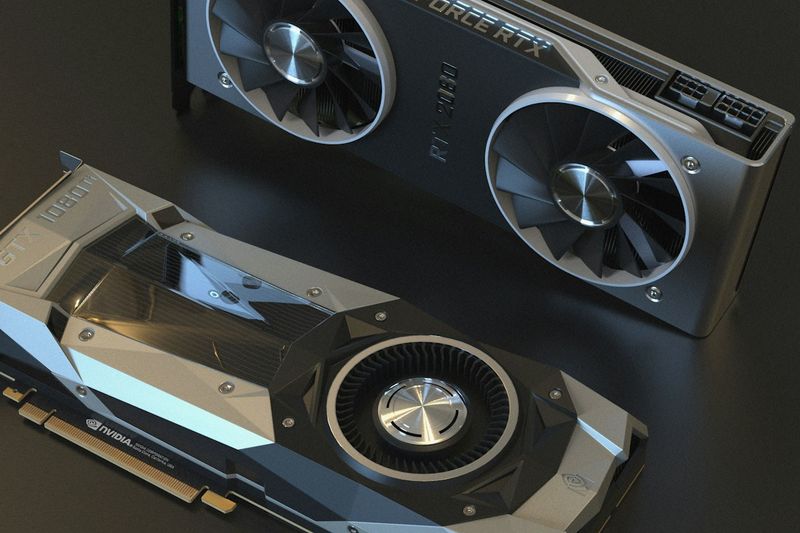
Running your own model makes sense when usage is high, you plan to use it for years, and an open-weight model is good enough for most of the work. If your data cannot leave a closed network, it is often the only option.
- Volume: In a talk by KakaoPay, a Korean fintech company, the team shared internal figures showing that serving the open-weight model GLM 5.2 on their own GPUs was about 2.8x more cost-effective than the API by token volume, and roughly 4 to 6x compared with Sonnet. The gap widened as usage grew.
- Time: Cloud GPUs are rented, so the bill keeps accumulating. According to the talk, the cost of owning hardware overtook renting after about a year.
- Models: You can't easily change how an open-weight model was trained, but you can load it on your own GPUs and use it for inference, which is the part that generates answers.
- Security: Government, finance, and healthcare teams working on air-gapped networks can still use AI.
All model names reflect what was available at the time of the talk.
Use open-weight models for everyday work, the API for the hard stuff
Instead of sending everything one way, route work by difficulty. Everyday tasks go to the open-weight model on your own servers, and only the tasks that truly need a frontier model go to the API.
Based on an internal employee survey shared in the talk, GLM 5.2 was rated at about 98% of Haiku, about 70% of Sonnet, and about 26% of Opus. So the team kept the API only for work that needs Opus-level quality. Because open-weight models are improving quickly, they set up a process to evaluate and adopt new ones fast. If you want to measure cost by finished work rather than by tokens, see our guide to AI cost per successful task.
What made the biggest difference in operations
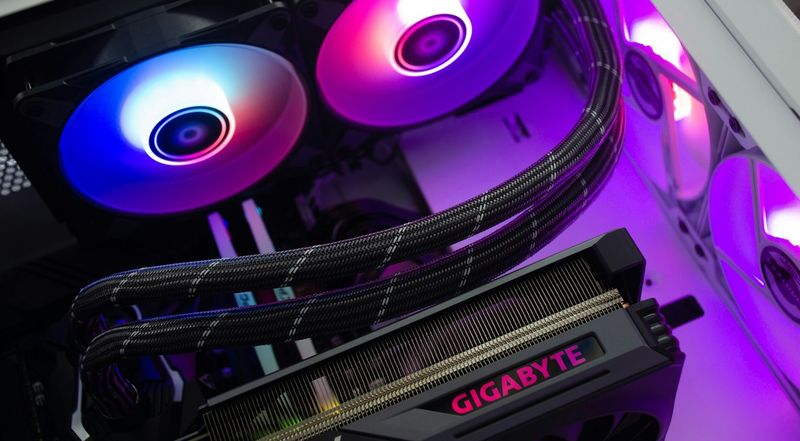
The largest gains came not from new algorithms but from how GPUs were shared and how fast servers started. These are internal results KakaoPay shared in the talk:
- A shared GPU pool: When each service has its own GPUs, customer-facing apps are busy during the day and batch jobs at night, so capacity sits idle. Merging everything into one pool, with customer traffic first and batch jobs soaking up spare capacity, recovered about 25% of wasted GPUs.
- Autoscaling: Servers scale out as concurrent requests rise, and services with predictable patterns scale ahead of time on a schedule.
- Startup time: Loading a model can take minutes. Copying models to storage local to each server and reusing memory measurements and precompiled results cut startup from about 10 minutes to about 3.
Three terms come up constantly. Here they are in plain English:
| Term | What it means |
|---|---|
| KV cache | Stores work already done in a conversation so the next answer comes faster |
| Quantization | Lowers number precision to save memory and compute |
| TTFT (time to first token) | How long it takes for the first word of an answer to appear |
The talk gave a concrete example: a 122B-parameter model needs about 244GB at standard FP16 precision, so it has to be split across two 141GB GPUs. Quantized to FP4, it shrinks to about 61GB and fits comfortably on one. For more on reusing stored computation, read our explainer on prompt caching.
A real example of AI on-premise: daglo On-Premise

daglo On-Premise is built for closed networks in government, finance, and healthcare. The transcription engine, the daglo app, and an optional private LLM run on a dedicated server inside your network, with no outside connection. Maintenance and incident response, server included, are part of the package.
DB Life Insurance, a Korean insurer, started a proof of concept inside its internal network to monitor sales call recordings for mis-selling. It used a daglo On-Premise engine fine-tuned on its customers' speech patterns and insurance terms. According to daglo's customer story, by the end of the pilot the team said it would be hard to work without daglo, and the project moved to full deployment. Read the full story in on-premise speech recognition on closed networks.
The talks behind this article were recorded and summarized with daglo, too. Speaker ID remembers the voices of the people in your meetings and fills in their real names instead of "Speaker 1" from the next recording on, so you can see who said what at a glance. daglo is the first service in Korea to offer this to all users. Learn more about Speaker ID
#OnPremiseLLM #OnPremise #LLMCost #OpenWeightModels #GPU #AirGappedAI #SpeakerID #daglo
Where talk becomes work.
Get started with 1,000 credits a month — no credit card required.