
On-Premise Speech Recognition: Closed-Network Case Studies
Contents
Still typing up meeting minutes by hand because security rules won't let you send recordings to an outside AI service? When audio can't leave the internal network, writing up one meeting can take several times longer than the meeting itself.
This post shows how daglo has brought speech recognition into closed networks, based on daglo's published enterprise and customer pages. For the cost side of running AI in-house, see on-premise LLMs vs. APIs.
What is on-premise speech recognition?
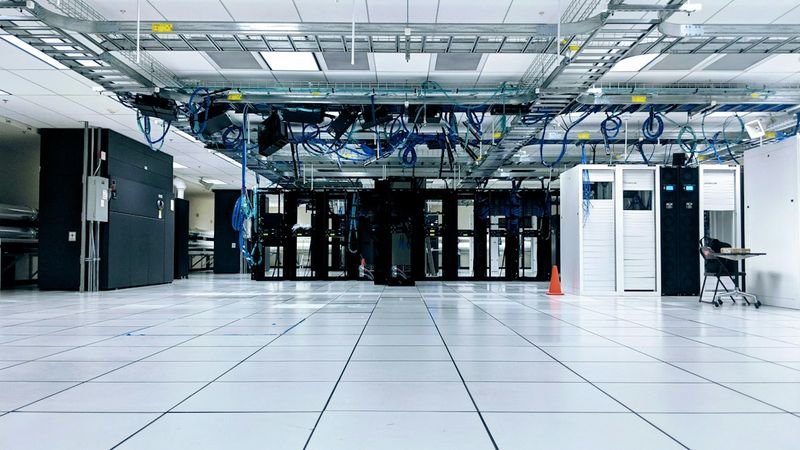
On-premise speech recognition runs transcription and summarization on your own servers, with no internet connection. Audio and transcripts never leave your network.
"Closed-network AI" is the broader term for AI that works only inside a network cut off from the internet. daglo on-premise is built for public-sector, financial and healthcare closed networks: the daglo app, the speech recognition engine and an optional private LLM run on a dedicated leased server inside your network.
Cloud vs. on-premise speech recognition
The core difference is where your data lives. Cloud is ready at sign-up; on-premise runs offline with an engine tuned to your data.
| Cloud (daglo Team plan) | On-premise (daglo on-premise) | |
|---|---|---|
| Where data lives | Cloud operated by daglo | Dedicated server on your internal network |
| External connection | Used over the internet | Not required |
| Custom training | Optional engine tuning on your data | Engine trained on your terminology and the way your people speak |
| Maintenance | daglo runs the service | Hardware and software maintenance including the server, incident response, major engine upgrades |
| Best fit | Companies and teams that want to start fast | Public, financial and healthcare organizations on closed networks |
Case 1: DB Life Insurance monitors sales calls inside a closed network

DB Life Insurance, a Korean life insurer, uses daglo on-premise to check recorded sales calls for mis-selling, after testing a tuned engine on its internal network.
The daglo customer story names three challenges: unusual speech patterns, dense insurance jargon, and a closed network cloud tools can't reach. daglo fine-tuned its engine on the customer's speech and terminology and ran a proof of concept (a trial before full purchase) on the internal network. The case study describes the outcome (translated from the Korean page):
By the end of the POC, the team said they could hardly work without daglo anymore, and the trial led straight to a full rollout.
The deal was also covered by the Korean business daily Money Today in March 2025.
Case 2: Daegu Metropolitan City has automated council minutes since 2019

Daegu has used daglo to generate city council minutes automatically since 2019, with the engine retrained on the city's own data every year.
Daegu is one of Korea's largest cities. Before daglo, the case study notes, writing up a one-hour council meeting by hand took two to three times as long as the meeting. In 2022 the city also launched Sotong-Ieum, a public-private video conferencing system powered by daglo's speech engine.
Another slow part of writing minutes is working out who said what. In the cloud version of daglo, Speaker ID remembers the voices of the people in your meetings, so from the next recording on their real names appear automatically instead of "Speaker 1". daglo is the first service in Korea to offer this to every user.
Results from custom engines, by the numbers
daglo's enterprise page lists three results without naming the organizations behind them.
- 95%+ accuracy in media: speech recognition accuracy for media work such as broadcast transcription and automated subtitles.
- 90%+ accuracy in specialized environments: speech recognition accuracy in conditions that are harder than a typical office.
- 1.5% error rate in a call-center voice authentication POC: a trial of an AI contact center that confirms callers by their voice. This figure, the equal error rate (EER), is the point where the rate of wrongly rejecting the real caller equals the rate of wrongly accepting someone else. Lower is better.
For a plain-language look at how transcription accuracy is measured and what the numbers mean, see our post on speech recognition accuracy.
What to check before adopting on-premise speech recognition

Run a proof of concept on real recordings first, then settle custom training, security and maintenance terms.
- Prove it with a POC first: run a trial on the internal network with real recordings to see accuracy and impact before you commit.
- Train on your vocabulary: if your work is full of specialist terms, decide whether to train the engine on your data and retrain it regularly, as Daegu does.
- Access control, audit logs and retention: daglo supports single sign-on, role-based access control, full audit logs of all activity, and encryption of data at rest and in transit. Decide how long recordings and transcripts should be kept under your own policies.
- Maintenance scope: confirm that server incidents and engine upgrades are covered. daglo on-premise includes hardware and software maintenance, server included, and major engine upgrades.
A closed network doesn't have to mean writing every set of minutes by hand. Transcribing and summarizing inside the internal network is already part of daily work at financial and public-sector organizations in Korea, and daglo is ISO 27001 certified.
Where talk becomes work.
Get started with 1,000 credits a month — no credit card required.