
7 Lessons Before You Build an AI Agent: Planning to Security
Everyone says you should build an AI agent, but where do you find one clear guide to what matters first, from planning to cost to security? Feature announcements keep coming, yet it is hard to know where a real project will stall, so teams end up repeating the same mistakes.
This post is based on what the daglo team heard at OpenAI Builder Bootcamp Seoul, held in Seoul on October 27, 2026. We pulled together the messages that kept coming up across all seven sessions and a short takeaway from each one, with a link to a detailed recap of every session.
Building AI agents: the event at a glance

An AI agent is a system in which a model uses tools and data to carry a defined task through to completion. The bootcamp spent a full day on how to design, build, and improve AI services like this with OpenAI's platform.
| Item | Details |
|---|---|
| Date | Tuesday, October 27, 2026 |
| Location | Seoul |
| Host | OpenAI |
| Audience | Developers and product planners building AI services |
| Program | Seven sessions: Opening, Solution Scoping, Codex, Agents, Realtime, Production and Optimization, Cybersecurity |
OpenAI engineers led every session, each with customer examples and a Q&A. The day moved in a deliberate order: first how to choose the right problem, then how to build with Codex, agents, and voice, and finally how to run the result in production and keep it secure. That order is a useful checklist on its own, because most stalled AI projects skip one of these steps rather than fail at the model itself.
Five messages that ran through every session
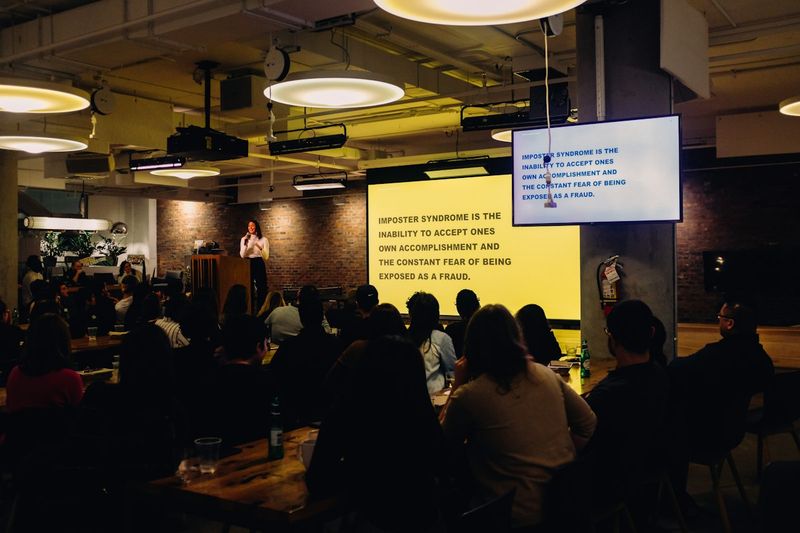
The topics differed, but the same principles came up again and again. Settle these five before you build, and you will skip a lot of trial and error.
- Measure finished work, not good answers: A convincing response means nothing if the actual task never got done.
- Design evaluation first: Prepare typical cases, failure cases, and scoring criteria before you build, so you can compare every change.
- Start with a strong model, optimize cost later: Prove the use case with a capable model, then use your evaluation set to find cheaper settings.
- People make the final call: Code changes, security patches, and priorities still need a human to sign off.
- Keep the original record: Compressing long conversations can drop details, so store the raw record and task state separately.
7 lessons before you build an AI agent, session by session

Here is one takeaway from each of the seven sessions. Click a title to read the full recap.
- Opening: To grow personal AI use into team and company workflows, ship something small, gather feedback, and improve.
- Solution Scoping: Pick high-impact, low-complexity tasks first, and define success as finished work.
- Codex: Give clear goals, context, constraints, and a definition of done, then verify with tests and human review.
- Agents: Agents combine several patterns, and you need evaluation and execution logs designed up front to improve them.
- Realtime: Voice agents separate natural conversation from accurate task handling and evaluate each step on its own.
- Production and Optimization: Compare cost per successful task, not price per token.
- Cybersecurity: Judge security automation by risk reduced through verified fixes, not by the number of findings.
Keep the original record with daglo

Of the five messages, keeping the original record is the easiest to start today. Record a meeting or seminar with daglo and you get the transcript and the summary side by side, so anything the summary left out is one click away in the original.
This matters more than it sounds. Several speakers pointed out that when a long conversation is compressed, small but important details, such as a correction or a customer saying no, can quietly disappear. A full transcript gives you something to check against.
We built this recap the same way. With the transcript in place, you can ask BoardChat something like "List only the principles that came up in every session" and pull what you need from hours of notes.
For meetings where several people take turns, Speaker ID is especially handy. It remembers voices and fills in real names instead of "Speaker 1" from the next recording on, and daglo is the first service in Korea to offer it to every user. Learn more about Speaker ID
#AIAgents #OpenAI #BuilderBootcamp #Codex #AIEvals #VoiceAI #AIAdoption #daglo
Where talk becomes work.
Get started with 1,000 credits a month — no credit card required.